Bottom line:
-
Gretna, NE groundwater commonly contains contaminants like arsenic, nitrates, chlorine byproducts, and sediment that a reverse osmosis system is specifically designed to reduce.
-
A properly installed RO system delivers filtered water directly from your tap, addressing taste, odor, and safety concerns at once.
A reverse osmosis (RO) filter is one of the most effective point-of-use solutions for households dealing with multiple water quality issues simultaneously. For Gretna residents drawing from groundwater sources, that matters more than most people realize.
The City of Gretna draws its water supply from groundwater. Groundwater is naturally susceptible to a range of dissolved minerals and chemical contaminants that standard municipal treatment doesn’t always fully remove. If you have been searching for a Reverse Osmosis Water Filter in Gretna, NE, understanding exactly which problems RO technology targets will help you decide whether it is the right fit for your home.
What Contaminants Are Common in Gretna’s Water Supply
Testing data provided to the Environmental Working Group by the Nebraska Department of Health and Human Services shows that Gretna’s tap water has met federal health-based drinking water standards in recent assessments, but passing a federal compliance test does not mean the water meets the latest health guidelines.
That gap matters. Several contaminants are regulated at levels that federal agencies acknowledge carry some residual risk. The most frequently cited concerns for Gretna-area groundwater include:
-
Arsenic – Arsenic is a potent carcinogen and a common contaminant in drinking water. RO membranes are among the most effective residential technologies for reducing it.
-
Nitrates – Common in agricultural regions of Nebraska, nitrates pose particular risks to infants and pregnant women. According to the U.S. EPA’s drinking water standards, the maximum contaminant level for nitrates is 10 mg/L, and RO systems consistently reduce nitrate concentrations well below that threshold.
-
Chlorine and disinfection byproducts – Municipal treatment adds chlorine to kill bacteria, but that process creates byproducts. Contaminants such as chlorine, chloramines, and volatile organic compounds can still enter the water supply, even with stringent regulations in place.
-
Sediment and turbidity – Groundwater can carry fine particles that affect clarity and taste.
-
Hard water minerals – Hardness, or the concentration of minerals like calcium and magnesium, can affect water quality and potentially lead to scale buildup in appliances and pipes.
How a Reverse Osmosis System Actually Works
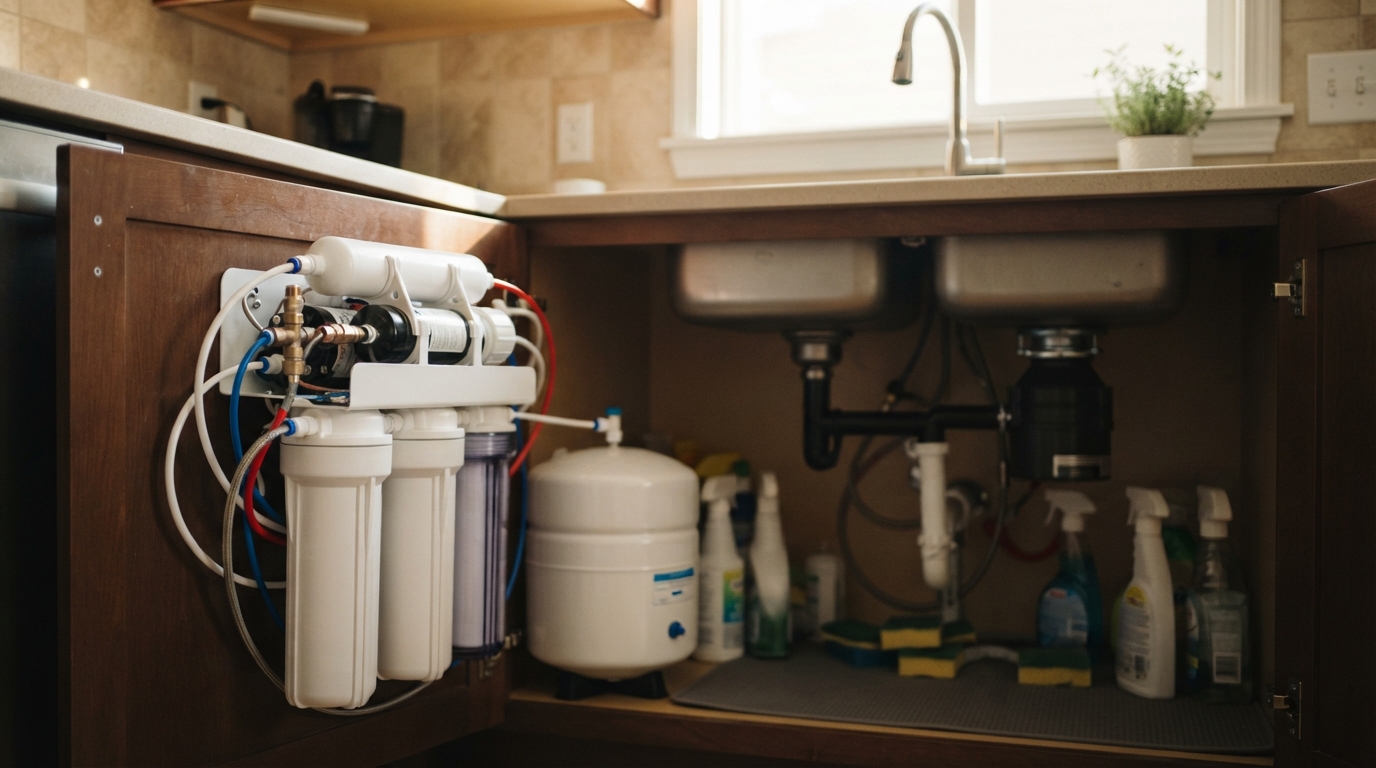
An RO system forces water through a semi-permeable membrane under pressure, physically blocking dissolved solids, heavy metals, and many chemical compounds. Most residential systems include multiple stages:
|
Stage |
Filter Type |
Primary Purpose |
|
Pre-filter |
Sediment cartridge |
Removes particles, silt, rust |
|
Pre-filter |
Carbon block |
Reduces chlorine, VOCs, odors |
|
Core stage |
RO membrane |
Blocks dissolved solids, nitrates, arsenic, heavy metals |
|
Post-filter |
Polishing carbon |
Improves final taste and clarity |
The filtered water is stored in a small tank under the sink and delivered through a dedicated faucet. The system runs quietly and requires only periodic filter changes to maintain performance.
Advanced reverse osmosis systems provide clean, great-tasting drinking water by removing impurities and contaminants, and are designed for reliability and efficiency, delivering purified water straight from the tap for your home and family.
RO vs. Other Filtration Options for Gretna Homes
Not every filtration method addresses the same problems. Here is a quick comparison of the most common options:
|
System |
Removes Nitrates |
Removes Arsenic |
Removes Chlorine |
Softens Hard Water |
|
Reverse Osmosis |
Yes |
Yes |
Yes |
Partially |
|
Carbon Filter Only |
No |
No |
Yes |
No |
|
Water Softener |
No |
No |
No |
Yes |
|
UV Filtration |
No |
No |
No |
No |
For households concerned about multiple contaminants at once, RO is the only single-system solution that addresses dissolved solids, chemical byproducts, and heavy metals together. Many Gretna homeowners pair an RO drinking water system with a water softener to handle both hardness and contaminant reduction.
Getting the Right System Installed in Gretna
Choosing the correct RO unit depends on your household’s water test results, daily water usage, and existing plumbing. A professional assessment before purchase prevents the common mistake of buying a system sized for the wrong flow rate or missing a specific contaminant your water actually contains.
Omaha H2O provides water treatment services including sales, installation, and repair for reverse osmosis drinking water systems, water softeners, UV light filtration, and ultrafiltration systems. They also offer filtration for iron, sulfur, nitrate, manganese, and tannin. That range of specialty media lets a technician match the system to what your water test shows, rather than recommending a one-size-fits-all unit.
Frequently Asked Questions
How often do RO filters need to be replaced? Pre- and post-filters typically need replacement every 6 to 12 months. The RO membrane itself usually lasts 2 to 3 years depending on water quality and usage volume.
Will an RO system reduce water pressure at my main tap? No. RO systems are point-of-use units connected to a dedicated faucet, so they do not affect pressure at your kitchen or bathroom fixtures.
Does RO water taste different? Most people notice a cleaner, neutral taste because the system removes dissolved minerals, chlorine, and organic compounds. The polishing carbon stage in the final filter further refines flavor.
Can an RO system handle Gretna’s hard water on its own? RO membranes do reduce some hardness minerals, but a dedicated water softener is more effective for high-hardness groundwater. Many households use both systems together for complete coverage.
If you are ready to address your home’s water quality concerns with a professionally installed system, Omaha H2O serves the Gretna area and can help you identify the right reverse osmosis solution based on your actual water conditions. Call or text (402) 983-6085 to schedule a consultation or request a free quote.